
Ben Page’s Philosophical Ruminations
Socrates (Theaetetus 155d) and Aristotle (Metaphysics 1.2 982b12) both thought that wonder is what led people to philosophise. I like to wonder about things, and this website is dedicated to my philosophical wonderings.

Latest Works
Books
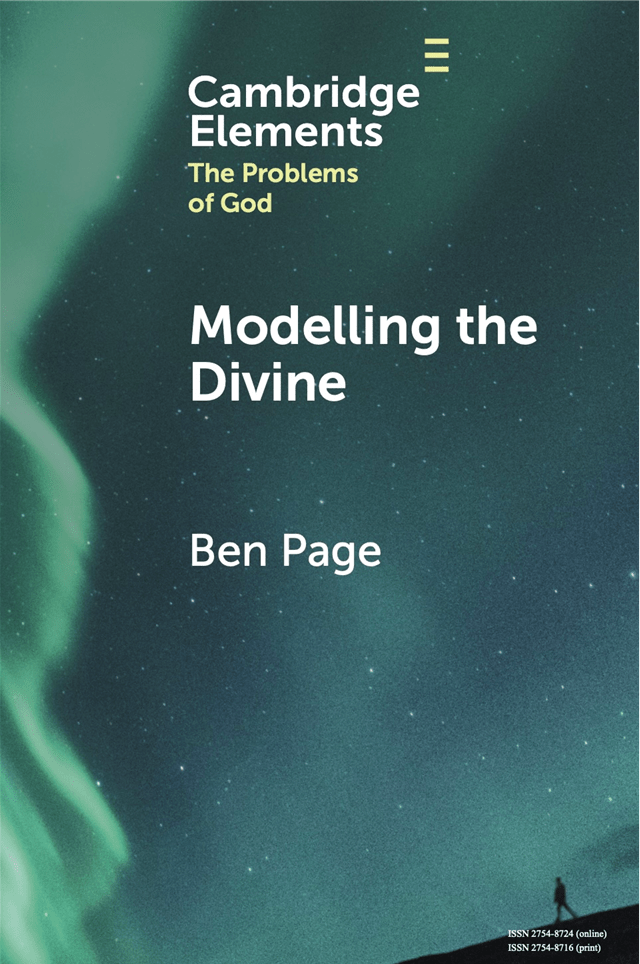
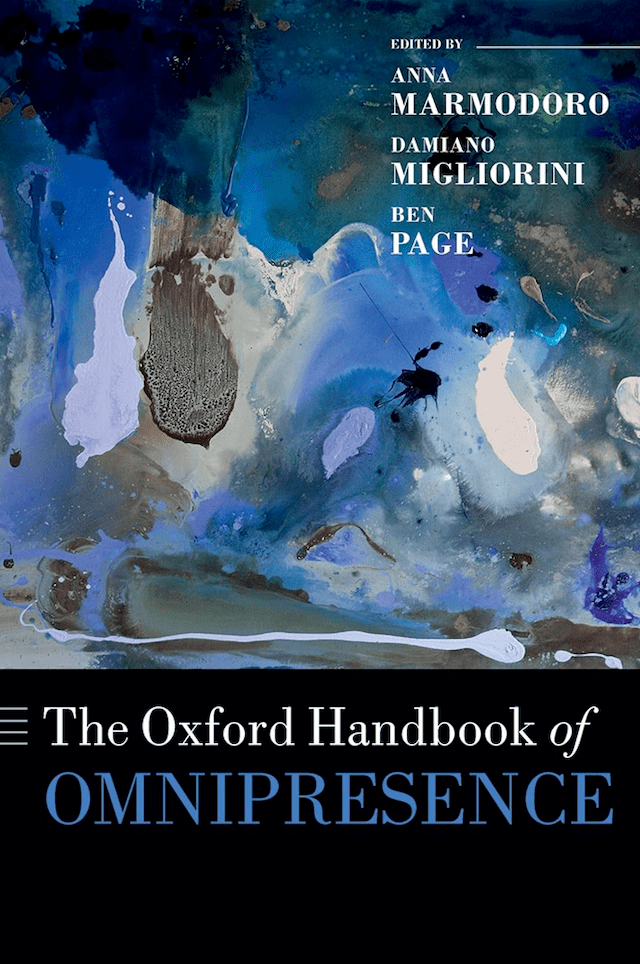
Five Most Recent Articles
Knowing the End from the Beginning, Agatheos
There is an objection posed against Brian Leftow’s conception of a timeless God which claims that God cannot know the temporal order of events, with Craig going so far as to assert that on Leftow’s view God’s life will be chaotic. If this objection is right then Leftow’s God cannot know the end from the beginning. This paper sets out the objection, describing how it arises from Leftow’s Anselmian view of God’s relationship to Creation and then shows several ways in which the objection can be overcome. Much of this centres around discussions of the direction of time and how Leftow’s God could know this direction. The paper then concludes by noting that what has come before can be modified so that other conceptions of divine timelessness can also explain how God knows the temporal order of Creation’s events.
{paper}
O Precreation, where Art thou?, International Journal for Philosophy of religion
The thought that even though God has created, He actually existed alone without creation, what I’ll call ‘Precreation’, seems to be a key premise in some contemporary arguments against divine atemporalism. The question this paper addresses is whether we have any strong reasons for affirming Precreation. Before answering this question I will discuss how Precreation is understood and then how some arguments against divine atemporalism employ this notion. The bulk of the paper then examines the main arguments for endorsing Precreation and concludes that they don’t provide good grounds for adopting it. As a result, I suggest that atemporalists shouldn’t be troubled by those arguments against their view which require Precreation since they can plausibly reject those premises.
{Paper}
Non-reductive Approaches to the Metaphysics of Powers: An Introduction, Philosophy Compass
Non-reductive theories of powers/dispositions/capacities/potencies/potentialities are of much interest within contemporary metaphysics. There have been many discussions which attempt to explicate their nature as well as numerous others which suggest their application. Here I focus on providing an introduction to the former, the metaphysics of non-reductive powers, whilst briefly commenting on the latter, their applications. The paper will therefore offer a map of the debates and positions taken within present discussion.
{Paper}
Eternal Omni-Powers, Faith and Philosophy
Power metaphysicians are concerned with, well, powers. Theists claim interest in the most powerful entity there is, God. As such, recent work on the ontology of powers may well have much to offer theists when thinking about God’s power. In this paper I start to provide a metaphysics of God’s ‘power’, something many definitions of omnipotence make reference to. In particular I will be interested in explicating how a power ontology can account for the strength and range of God’s power, as well as showing how this account of divine power can fit with a timeless conception of God.
{Paper}
Omnipresence and Special Presence, Oxford Handbook of OmniPresence
Whilst God is said to be omnipresent, some religions also claim that God is specially present, or more present at/in certain locations. For example, a claim of special presence shared by Christians and Jews is that God was specially present at/in the first Temple. The chapter canvases various ways in which one can make sense of this claim whilst still affirming the omnipresence of God. This includes offering different accounts of special presence relying on derivative notions of presence, and offering other views of special presence that rely upon fundamental accounts of presence. The chapter itself does not argue for one view in particular, but instead offers a map of possible options and future areas for research.
{Paper}
